Achoti yan Hineska' Agaga'
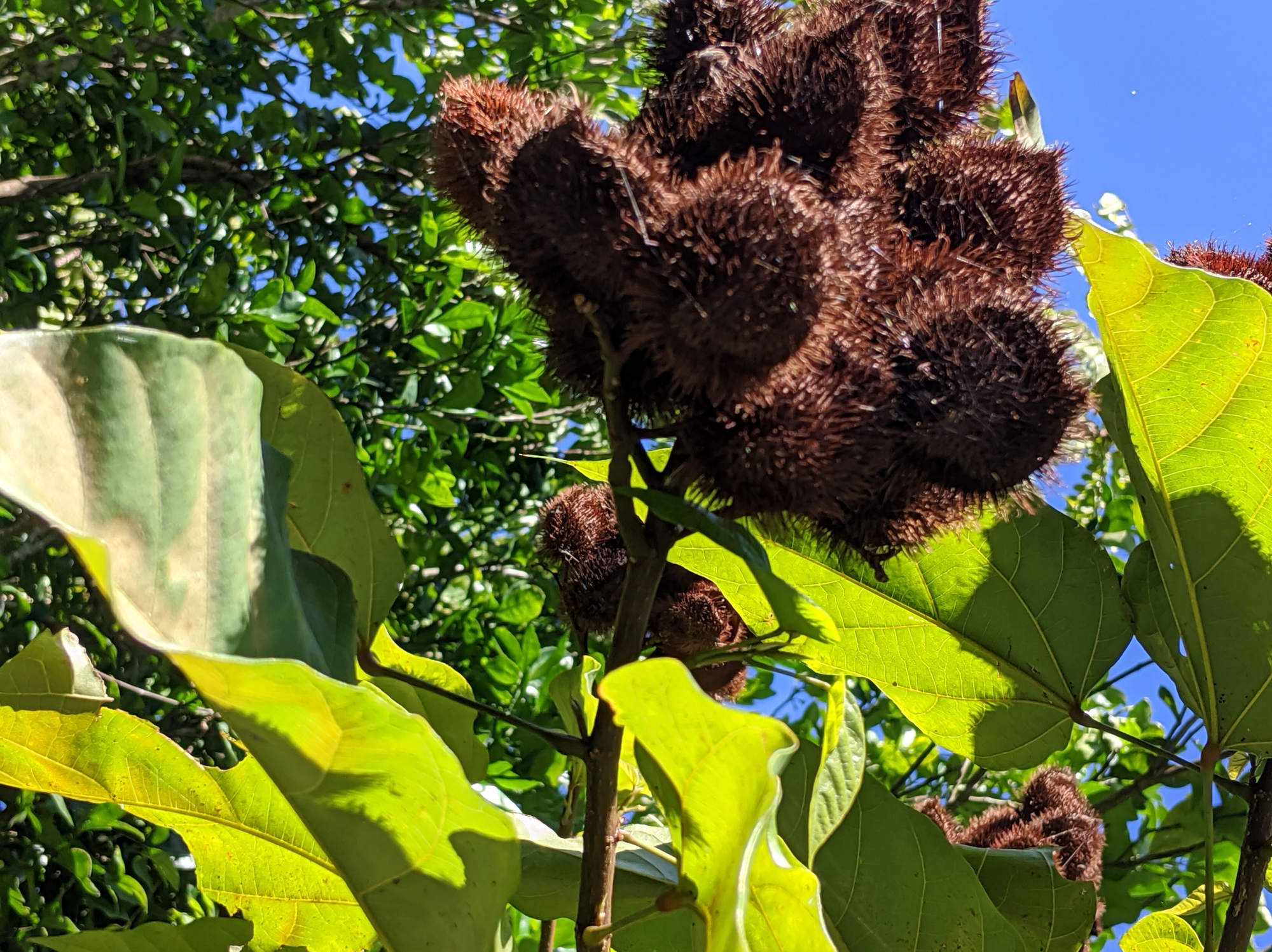
Achoti yan Hineksa’ Agaga’ “Red Saffron Seed & Red Rice” I fine'nina gi i lamasa: The first on the table. Reality hits hard when the memories awaken at the crux of the matter, when we gather as one as family and friends in a Chamoru fiesta. Let me set you off back into a dream, at the beginning of the time when the Spanish missionaries settled on our island. The gift of the rare achoti seed holds the symbol of change, a symbol of a new beginning, a symbol of a gift of an unforgettable bond that would forever transform the Chamoru people. It was a Spanish mission to convert and bring to the world God’s true story of Jesus Christ. Although lives have been transformed, lives have been taken.But a newfound approach to Christian spirituality echoes the true faith of the one who died for us and sacrificed his life to save us from despair; we have learned it was Jesus Christ. Healers of the island turn to the achoti for survival and restoration, and there is so much power in this achoti seed. It is a tower of Na’ metgot (to make strong). It is so powerful that not only did it convert us to find Jesus, it is so powerful that it was one of the many seeds to grow from the soil up, still to this very day, and it is so powerful that the achoti created the Hineksa’ Agaga,’ in which when we gather all the food on the time to place them the Hinesksa’ Agaga’ is the first on the table, and the first to be served. Hineksa’ Agaga’ the red rice, is the strong foundation of a symbol of being grounded, a symbol of togetherness, a symbol of goodness, and a symbol of the reminder of what God’s message to us all as Chamoru, even though it was in the past, but we share this as a symbol of sacrifice. So, a reminder, when you wait so patiently, your turn to get your first serving of the Hineksa’ Agaga,’ is to think of this: we are not serving the Hineksa’ Agaga,’ because we have to, but because we wholeheartedly want to, and that we want to serve you humbly first, because the making of that Hineksa Agaga was not only a sacrifice, it was a service made for… you. Megai na bendision (Many blessings). Written by Anna Marie Moniz (Baleto)